Your lymphatic system works quietly in the background every day, helping to collect excess fluid from the tissues, return it to the bloodstream and support the body’s immune defences. It does not need an extreme cleanse. What it benefits from most is something far less dramatic: regular movement, breathing and consistent everyday care.
After more than 26 years working in wellness and helping clients—and six years here at my Inner Wellbeing clinic in Dee Why—I have learned that the simplest routines are often the ones people can actually maintain. You do not need to spend an hour on a complicated morning routine. A few gentle habits, repeated regularly, can help you work with your body.
What does the lymphatic system do?
The lymphatic system is a network of vessels, nodes, tissues and organs that carries a clear fluid called lymph. Among its important jobs, it helps maintain fluid balance, transports certain fats from the digestive system and plays a role in immune function.
Unlike blood circulation, lymph does not have one central pump like the heart. Lymphatic vessels do contain tiny valves and muscle cells that help move lymph, while breathing, muscle contractions and general body movement also contribute to its flow. This is why gentle, regular movement matters more than chasing one “perfect” detox technique.
10 gentle daily habits to support lymphatic flow at home
1. Begin with five slow belly breaths
Deep diaphragmatic breathing changes pressure through the chest and abdomen and is commonly included in lymphoedema movement programs. It can also help settle your nervous system, making it a beautiful way to begin your day—and to slow down again at the end of it.
Sit or lie comfortably. Relax your jaw and shoulders. Place one hand below your ribs, breathe in gently through your nose and feel your abdomen expand. Exhale slowly without forcing the breath. Repeat five times.
2. Walk—even if it is only for 10 minutes
Walking uses the muscles of the legs and feet in a natural pumping action. You do not have to turn every walk into an intense workout. A gentle walk after lunch, a lap around the block or walking while you take a phone call all count.
If 10 minutes at once does not fit your day, try two five-minute walks. Consistency is more valuable than perfection.
3. Wake up your calf muscles
The calf muscles are often called the body’s “second pump” for circulation because each contraction helps push blood in the veins back up from the lower legs. This muscular pumping action also plays an important role in lymphatic movement.
Try 10 to 20 slow calf raises while holding the kitchen bench, followed by ankle circles or ankle pumps. These small movements are particularly useful after sitting at a desk, travelling or standing in one place for a long time.
4. Break up long periods of sitting
The lymphatic system responds to movement, so aim to change position regularly. Stand, stretch, walk to refill your water or roll your shoulders every 30 to 60 minutes. If mobility is limited, seated marching, ankle pumps and opening and closing the hands are gentle alternatives.
5. Drink regularly throughout the day
Hydration and fluid balance are hugely important for normal body function, but hydration is not simply about drinking more and more plain water. Water absolutely contributes to hydration; however, the body also relies on electrolytes to maintain fluid balance and support normal nerve and muscle function.
Many people associate electrolytes only with heavy sweating, sport or hot weather. Those are certainly times when fluid and electrolyte losses can increase, but throughout my years in wellness I have also met many people whose fluid and electrolyte balance may not be supporting them as well as it could—even when they are not athletes. I have had many valuable conversations with my doctor, other practitioners and clients how important this balance can be. Symptoms such as fatigue, puffiness or feeling “flat” can have many possible causes, so they should never be used to diagnose an electrolyte imbalance on their own.
A simple, inexpensive option I often suggest is adding a small pinch of Celtic sea salt to a glass of water once or twice a day, if sodium is appropriate for you. This supplies mainly sodium and chloride; it is not the same as a balanced electrolyte formula and the trace minerals are present only in small amounts. In my clinic experience, some people tell me they notice changes in how puffy or energised they feel within a few days of improving their fluid and electrolyte routine, although results vary and this is not a treatment for unexplained fluid retention.
For a measured formula, I chose Sodii Everyday Hydration Salts for Inner Wellbeing because I wanted a clean, high-quality option with meaningful amounts of the key electrolytes: 1,000 mg sodium, 210 mg potassium and 70 mg magnesium per serve. Sodii uses Australian lake salt and contains no artificial sweeteners.
Sodii is deliberately high in sodium, which can be helpful for some active people, heavy sweaters and hot Australian days—but it will not suit everyone. If you have high blood pressure, kidney or heart disease, are pregnant, take medication affecting fluid balance, or have been advised to limit sodium or fluids, ask your doctor or dietitian before using it.
Plain water is wonderful. Herbal tea can also become part of a calm daily ritual. Our Drain & Glow Tea combines cumin, coriander, fennel, dandelion leaf and hibiscus to support healthy digestion, natural fluid balance and everyday wellbeing. No tea can “drain” the lymphatic system on its own—it is the whole routine that matters.
6. Try body brushing or a sculpting tool
There are so many tools available now: dry body brushes, silicone lymphatic gloves, sculpting tools and body gua sha. I stock a few different options at Inner Wellbeing because I genuinely love them, personally use them and only sell products I believe are worth bringing into your routine.
Is there one perfect tool for everybody? No. The best one is the one that feels comfortable in your hand and that you will actually use. A beautiful, expensive tool sitting untouched in a drawer will do less for you than a simple body brush used consistently.
And if you cannot afford a tool—or simply do not want one—you already have a wonderful option: your hands. Gentle sweeping, tapping and pumping movements cost nothing. Honest wellness should never make you feel that you must keep buying products before you can care for your body.
Many people enjoy these tools for gentle exfoliation, body awareness and massage. You can explore the different lymphatic brushes, gloves and sculpting tools I have selected for Inner Wellbeing.
With a dry brush, begin before showering and use light strokes rather than scrubbing. Start at the feet and hands and work gradually towards the torso. Follow the directions supplied with a sculpting tool or gua sha, as the grip and technique will differ. Your skin should not sting, bruise or become bright red. Avoid broken, irritated, sunburnt or infected skin, and check with your practitioner if you have lymphoedema, fragile skin, neuropathy or a medical condition affecting circulation.
7. Use a light-touch body oil ritual
Before working down the arms, legs or abdomen, begin by gently preparing the key lymphatic areas closer to the centre of the body. In my simple home routine, I use soft tapping, sweeping or pumping movements around the collarbones, under the arms, at the crease of the groin and behind the knees. I often explain it like running water through a tube: you want the outlet area ready before encouraging movement further along the tube.
This is an easy step to rush past, but the order matters in lymphatic-style body work. I have created my own video to demonstrate the sequence; it is available through the QR code included with every Inner Wellbeing Lymphatic Oil. If you have had lymph nodes removed, surgery, cancer treatment or diagnosed lymphoedema, do not follow a generic pathway map—ask your qualified lymphoedema therapist to teach you the sequence that is safe for your individual body.
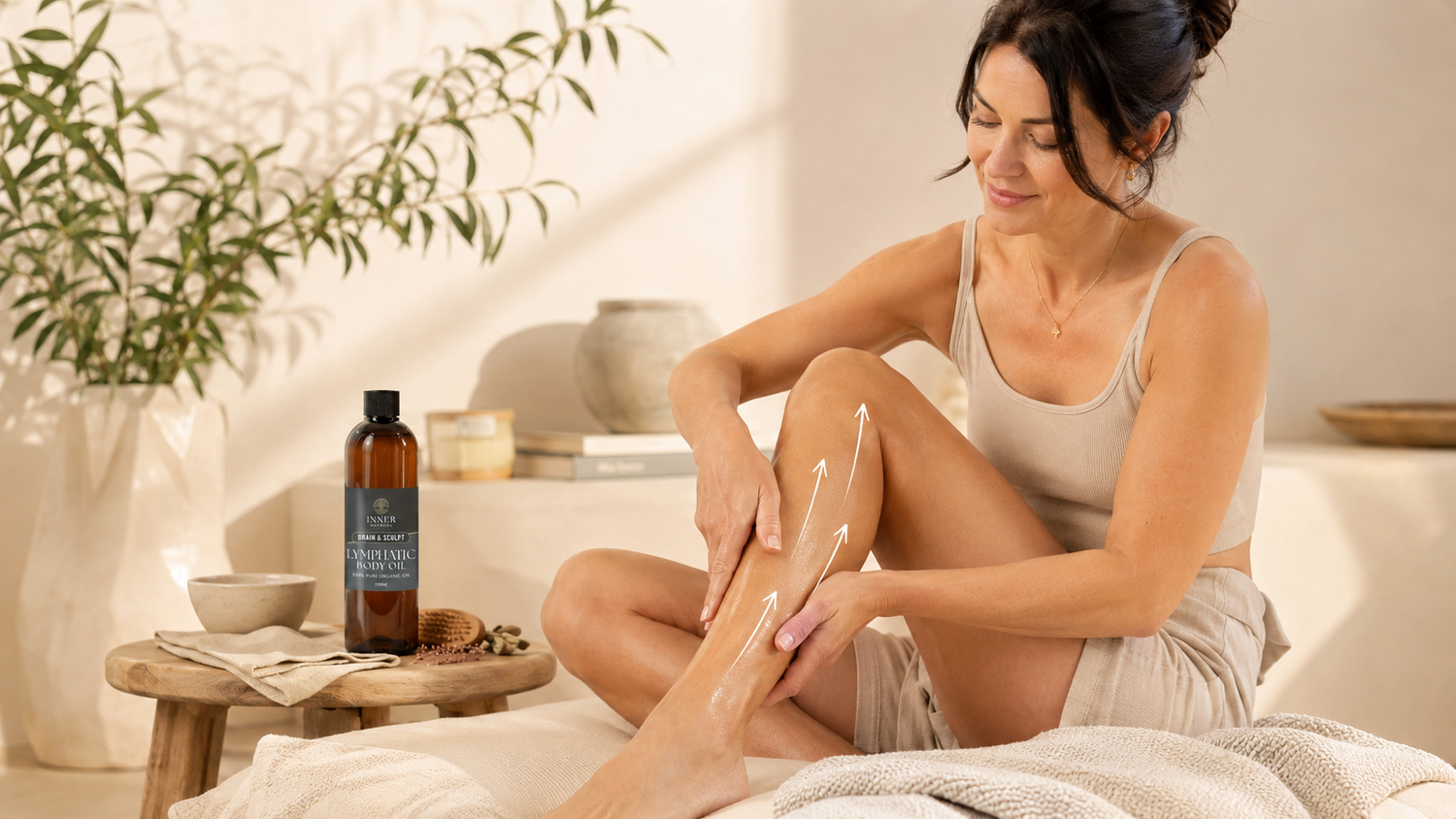
After preparing those areas, apply body oil to slightly damp skin using slow, comfortable strokes towards the torso. This is not the same as clinical manual lymphatic drainage, which uses a specific sequence and is best taught by a qualified lymphoedema therapist. Think of it as a mindful moisturising ritual that helps you slow down, notice your body and care for your skin.
I am incredibly proud of the Inner Wellbeing Organic Lymphatic Oil. Lymphatic drainage was actually one of the first parts of my own wellness journey after my bowel was removed and I experienced severe swelling. Since then, I have remained fascinated by the lymphatic system and have used countless oils from all around the world.
That personal journey, years of study and hands-on clinic experience helped me decide exactly what I wanted to create: a luxurious oil with beautiful glide for lymphatic-style massage, without leaving the skin feeling greasy.
The blend is rich in Camellia Oil—a lightweight botanical oil naturally containing fatty acids and vitamin E—along with nourishing Sweet Almond Oil. Cypress, Pink Grapefruit, Juniper Berry, Rosemary and Geranium essential oils create a fresh, purposeful body-care ritual. These oils do not medically “drain” the lymphatic system by themselves; the value is in pairing the oil with gentle touch, movement and consistent self-care while deeply nourishing the skin.
Every bottle includes a complimentary five-minute ritual guide, a clear lymph pathway map and QR-code access to my video demonstration. It is not simply another body oil—it brings years of my hands-on experience into a routine you can use at home.
8. Add a gentle bounce, march or sway
Rebounding on a mini trampoline combines muscle work with an up-and-down movement. If you enjoy a rebounder and can use one safely, start with a gentle “health bounce,” keeping the feet in contact with the mat. You can also march on the spot, dance, swim, use a chi machine or move through comfortable yoga or Pilates. There is no single perfect option—the aim is to create safe, rhythmic movement that your body tolerates and that you will repeat.
Vibration plates are another option, but they are not all the same. Some provide a simple wobble, while others use a controlled side-to-side pivotal motion and guided programs. Poor technique or an unsuitable setting can aggravate the lower back, spine or joints, so choosing the right machine and learning how to use it matters.
I have tried many vibration boards over the years and often wished I had one I could confidently recommend. I recently returned from Melbourne few weeks ago in June 2026, after spending two days researching and training directly with Hypervibe, and I was genuinely impressed by how different the technology and education are.
Hypervibe uses a pivotal, side-alternating motion that moves more like the pelvis does during walking. The platform creates repeated acceleration, increasing the gravitational load—or G-force—the body experiences and prompting rapid muscular contractions. The force and frequency can be adjusted for different goals, which is very different from simply standing on a basic vibrating or wobble-style board.
What I particularly love is that Hypervibe has a dedicated, guided lymphatic program. The app also provides many other guided exercise options for strength, muscle activation, movement and weight-management goals, so it is not a machine with only one use. Inner Wellbeing is a Hypervibe affiliate; reach out to me if you would like honest guidance after my training or help understanding which model may suit you.
For professional support, I also offer lymphatic drainage at Inner Wellbeing in Dee Why using medical-grade pressotherapy with seven individually selected programs. Professional treatment and home rituals can complement each other, but they are not interchangeable—especially when swelling has a medical cause.
9. Choose clothing that does not dig in
Very tight clothing, bras, socks or underwear can feel restrictive, especially when you are already puffy or swollen. If your bra band, straps, socks or clothing leave deep marks, consider whether the fit is too tight. Choose pieces that allow comfortable movement and do not dig into the skin.
Medical compression garments are different: they are specifically fitted to help manage certain types of swelling. If you have been prescribed compression, follow the instructions of your doctor or lymphoedema therapist rather than replacing it with loose clothing alone.
10. Build a routine you can repeat
I, Majella Brennan, the owner of Inner Wellbeing, but I am also a busy single mum and small-business owner. I struggle for time like so many other women. I know these rituals, but I am realistic about fitting them into everyday life—I am certainly not doing a 10-hour wellness routine.
I often stack small habits together. I gently open the key lymphatic areas while I am in the shower, then apply my body oil when I get out. In the morning, I tongue scrape and then oil pull with coconut oil while I journal. These habits work for me because they fit into things I am already doing.
You do not need to complete every habit every day. Choose two or three anchors:
- five slow breaths before breakfast;
- a short walk after lunch;
- calf raises while the kettle boils; or
- a body oil ritual after your evening shower.
If you do not have five minutes for a lymphatic-style massage, do two minutes. I genuinely believe that doing something small and consistent is more valuable than saving up for one long routine that happens only occasionally. Small habits are easier to repeat, and repetition is what turns self-care into something supportive rather than another impossible list to complete. Make the routine fit your real life—not somebody else’s highlight reel.
A note from Majella
I often say that wellness is not about copying somebody else’s perfect routine. It is about becoming curious, paying attention and discovering what genuinely helps you feel your best.
Start gently. Notice how your body responds. If a practice causes pain, dizziness, redness or increased swelling, stop and seek individual advice. Your body is always giving you information.
Build your at-home lymphatic ritual
Explore body oils, dry brushes, lymphatic tools and herbal tea chosen to make your daily routine simple and enjoyable.
Frequently asked questions
Does the lymphatic system need to be detoxed?
Your lymphatic system is already part of the body’s normal fluid balance and immune processes. There is no single drink, brush or massage that “flushes out toxins.” Gentle movement, breathing, hydration and appropriate medical care can support normal function and overall wellbeing.
What is the best exercise for lymphatic flow?
There is no single best exercise. Walking, swimming, calf raises, comfortable strength work, yoga, Pilates, dancing, chi-machine movement, vibration training and gentle rebounding all create movement or muscle contractions in different ways. The best choice is one that is safe for your body and that you can do consistently.
Can lymphatic drainage make you lose weight?
Lymphatic drainage does not burn body fat. Some people may notice a temporary change in puffiness or fluid-related swelling, but that is different from fat loss. Be cautious of products or treatments promising rapid weight loss through “detoxing” the lymph.
Can I do lymphatic massage if I have lymphoedema?
If you have diagnosed or suspected lymphoedema, ask a qualified lymphoedema therapist to assess you and teach you the correct sequence. The direction and technique can vary according to your medical history, surgery and functioning lymph pathways.
When should I see a doctor about swelling?
See a health professional for new, persistent or unexplained swelling. Seek urgent care for sudden swelling, swelling in one leg, a red or hot limb, chest pain or breathlessness.
Sources and further reading: Healthdirect Australia: Lymphoedema; Healthdirect Australia: Fluid retention; Cleveland Clinic: The lymphatic system; Cleveland Clinic: Lymphatic drainage self-massage.
Disclaimer: This article is for general education only and is not medical advice. It is not intended to diagnose, treat, cure or prevent disease. Speak with your doctor or qualified health practitioner before beginning a new routine, especially if you are pregnant, have heart or kidney disease, an active infection, a history of blood clots, cancer, lymph node removal or diagnosed lymphoedema.